High-Speed Rail Basics
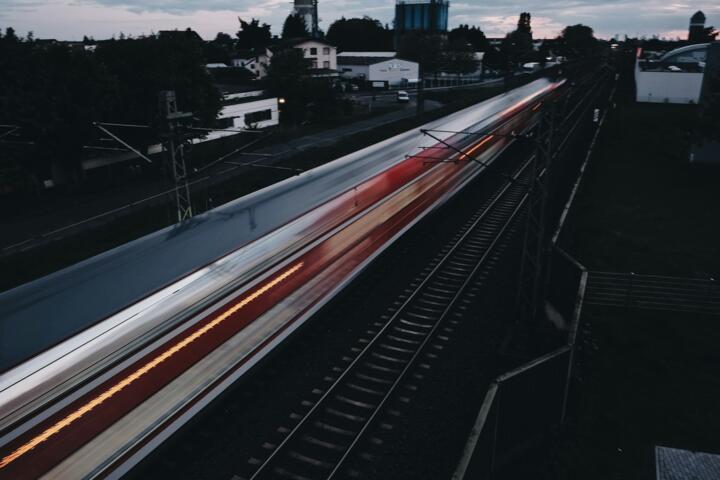
High-speed rail (HSR) runs on dedicated or upgraded lines with typical commercial speeds around 200–320 km/h, depending on the country and route. Flying often reaches higher peak speeds, but the practical travel time includes airport access, security screening, boarding, taxi time, and potential rebooking. For a concrete benchmark, a 300 km rail trip at an average of 250 km/h is about 1.2 hours of in-vehicle time, before adding station time. A 300 km flight might be 1 hour in-air, yet door-to-door time can stretch by 2–4 hours once you count airport arrival and delays.
HSR stations are usually central.
Rail timetables also tend to be more predictable on short-to-medium corridors because the main constraints are track capacity and dispatching, not air traffic slots. In contrast, aviation schedules depend on runway availability, air traffic control flow, and weather patterns that can trigger holding or cancellations. The European Union’s aviation emissions reporting and the ICAO framework both treat non-CO2 effects (like contrails and NOx) as part of aviation’s climate impact, which matters when you compare “per passenger-kilometer” numbers across modes. For example, many public calculators report that short-haul flights can have higher per-kilometer climate impact than rail, but the exact figure depends on electricity mix and aircraft load factor.
Check the route’s average speed.
In practice, the biggest differences show up at the edges of the journey. Rail often uses fewer steps: ticket validation, boarding, and walking to the platform. Airports add steps: ID checks, liquids rules, bag screening, and sometimes additional document checks for connecting itineraries. If you travel with a carry-on plus a small personal item, rail frequently matches that simplicity, while flying may require paying for checked baggage or choosing a fare class that includes it.
Main Problems and Pain Points
People often compare only the “in-vehicle” time and ignore the time budget around it. That mistake becomes costly when you miss a connection, arrive late to security, or face a rail platform change. Another common error is assuming that HSR always beats flying on time; the outcome depends on whether the rail line is direct, whether the airport is close to your origin, and whether the flight is non-stop. A third mistake is treating emissions as a single fixed number; rail emissions depend on the electricity used by the grid at the time and place, while aviation depends on aircraft type, altitude effects, and occupancy.
Time math breaks quickly.
Biological and health-relevant consequences show up indirectly through stress, noise, and air exposure. Higher stress can raise perceived fatigue and worsen sleep quality before travel, which affects how people feel after arrival; this is not a direct “health harm” claim, but it changes comfort and recovery. Airports also expose travelers to higher concentrations of particulate matter and ultrafine particles near busy terminals and runways, though the magnitude varies by location and time. On rail, noise exposure depends on speed, track design, and station surroundings; modern HSR trains are engineered for lower interior noise, yet platform and trackside noise can still be noticeable.
Weather affects both modes.
Dependencies matter. HSR performance depends on track maintenance, signaling systems, and power supply for electric traction; disruptions can cascade when a single segment is closed. Flying depends on aircraft turnaround, crew availability, air traffic control, and runway conditions; delays can propagate across networks. Supporting technologies also differ: rail uses centralized traffic management and automatic train control in many corridors, while aviation uses slot management and flight planning with dynamic rerouting. When you compare options, you need to check whether your itinerary is truly non-stop and whether the rail service is direct without a transfer.
Skip the “average” ticket.
Finally, travelers underestimate how baggage rules change the effective cost. Many airlines price fares by cabin bag allowances, checked baggage, seat selection, and change fees. Rail operators often include a broader baseline allowance, but rules vary by country and operator, and some services have restrictions for oversized items. If you travel with sports gear, instruments, or bulky luggage, the “cheapest” fare can become more expensive after add-ons.
Choose the Better Option
Build a door-to-door time
Start with a time budget that matches your actual workflow: leaving home, reaching the station or airport, and the buffer you need for security or boarding. For flying, a common planning assumption is arriving 2 hours before a short-haul departure in many airports, but the real requirement varies by airline and airport; check the airport’s posted guidance. For rail, use the operator’s recommended arrival time and add walking time to the platform, especially at large stations. Then compare the total, not the in-air or in-train time.
Door-to-door beats headline time.
In practice, you can create a simple spreadsheet with three rows: “access time,” “processing time,” and “in-transit time.” If your flight is at 07:30 and your airport access is 60 minutes, the early departure can force you into a hotel night or a very early wake-up. That changes the value of the trip even when the flight is faster on paper. I’ve seen travelers lose 30–45 minutes to a last-minute terminal change, which is why you should confirm the terminal and gate the day before.
Use the same buffer both ways.
Compare fare rules and baggage
List what each ticket includes: cabin bag size, checked baggage, seat selection, and change or cancellation terms. Airlines often sell multiple fare classes; a “basic” fare may restrict cabin bags or charge for seat selection, which can matter if you travel with a laptop bag plus a roller. Rail fares can also vary by flexibility and reservation requirements, and some routes require seat reservations. If you need flexibility, compare change fees and refund rules rather than only the base price.
Read the fine print twice.
In practice, you can estimate the true cost by adding likely add-ons: one checked bag, one seat selection, and one change fee scenario. If your trip is business-critical, the cost of a missed connection can exceed the fare difference. A small aside: on some airline apps, the baggage allowance shown at checkout differs from what you see on a confirmation email, so cross-check the allowance in the booking details screen.
Cost includes risk, not just fare.
Check directness and transfers
Direct rail services reduce transfer risk and simplify luggage handling. Non-stop flights also reduce connection risk, but they can be more fragile when air traffic constraints cause reroutes or cancellations. When you compare itineraries, count the number of segments and the minimum connection time. If a rail option requires a same-station transfer with a 10-minute window, the “fast” option can become unreliable during delays.
Transfers change the outcome.
Use the timetable’s “planned duration” and also check the operator’s delay reporting if available. For rail, look for whether the service is a single train number or a combination of services. For flights, check whether the itinerary is marketed as one ticket with protected connections or as separate tickets, because the latter shifts responsibility to you. This is where many comparisons fail: they treat a 1-stop flight as equivalent to a direct flight.
Prefer fewer segments.
Estimate climate impact with limits
Use per-passenger-kilometer estimates from reputable sources, but treat them as ranges. Aviation climate impact depends on aircraft efficiency, load factor, and non-CO2 effects; rail depends on the electricity mix and how the service is scheduled. If you have access to a carbon calculator, compare the same trip distance and passenger assumptions across modes. When the calculator offers “radiative forcing” or “including contrails” options, note which method it uses.
Numbers vary by method.
In practice, you can do a sanity check: if a calculator shows rail at 30–60 gCO2e per passenger-km and short-haul flights at several times that, the direction is plausible, but the exact values depend on the grid and aircraft. I’ve seen calculators change results by 2–3x when you switch from “CO2 only” to “including non-CO2,” so record which setting you used. If you need a decision for a specific event, ask the organizer which accounting method they accept.
Use ranges, not single points.
Account for comfort and fatigue
Comfort affects how quickly people recover after travel. Flying often involves cabin pressure changes and limited legroom, while rail can offer more stable seating and easier movement along the carriage. Noise exposure differs: aircraft cabin noise is typically high and constant, while rail noise depends on track and speed. If you have a condition affected by sitting posture or motion sensitivity, compare seat pitch, seat width, and whether you can stand or walk during the journey.
Comfort changes recovery time.
In practice, check seat maps and measure seat pitch where available. For rail, look for quiet car options or reserved seating that reduces interruptions. For flights, consider whether you can choose a seat near the front of the cabin to reduce boarding congestion, which can reduce stress. A mild frustration: seat pitch listings online sometimes reflect the “average” rather than the exact row, so verify the seat number if the booking system shows it.
Plan for movement breaks.
Plan for disruption behavior
Disruptions behave differently. Rail delays often come from track incidents, power issues, or signaling faults; the operator may reroute trains or replace service with buses. Aviation disruptions can include cancellations, rebooking on later flights, and baggage handling delays. Compare how each mode handles missed connections: rail may hold a later service for reservations, while airlines may rebook you only if you hold a single-ticket itinerary.
Disruption handling matters most.
In practice, check the operator’s disruption policy and whether you receive automatic rebooking or vouchers. For flights, review whether your fare includes travel insurance coverage for delays and whether the airline provides meal or hotel support under specific thresholds. If you travel with time-sensitive commitments, add a buffer day or choose the mode with more frequent departures on your corridor. This is where “fastest” can become “most reliable,” and the difference shows up in your calendar.
Choose based on tolerance.
Use the right booking tools
Use tools that show the full itinerary and the rules attached to it. For rail, operator websites and major rail aggregators often show seat reservations, platform information, and fare type. For flights, airline booking pages show baggage and change terms tied to the fare class, while aggregators can hide details behind expandable sections. If you use a third-party comparison site, open the final booking page to confirm baggage and cancellation terms.
Confirm rules on the final page.
As a practical aside, I once compared two fares on an aggregator and only found the cabin bag restriction after opening the airline’s “Manage booking” screen. That small step prevented an expensive surprise at the gate. If you travel with a laptop, check whether the airline allows a personal item that fits under the seat, because “personal item” definitions vary.
Don’t trust summaries.
Case Examples
Business trip with tight schedule
An anonymized traveler plans a 450 km trip for a meeting at 10:00. The rail option is a direct HSR service with a planned duration of 2 hours 5 minutes plus 45 minutes of station time. The flight option is a non-stop route with 1 hour 10 minutes in-air time, but the airport requires 2 hours arrival buffer and the airport access takes 70 minutes. The traveler chooses rail because the door-to-door totals are closer than the headline times, and the rail departure frequency reduces the risk of missing the meeting if the first option slips by 20–30 minutes.
Rail wins on reliability.
Leisure trip with flexible dates
An anonymized traveler wants to visit family and can shift departure by 1 day. The flight is cheaper on a basic fare, but it restricts cabin bags and charges for checked luggage, which the traveler needs for winter clothing. The rail option costs more upfront but includes a reservation and a more predictable baggage experience. The traveler chooses rail after adding the likely airline add-ons and comparing the cancellation rules, because the trip includes a return leg that could be affected by weather.
Cost flips after add-ons.
Comparison Checklist
| Decision factor | High-speed rail | Flying | What to check |
|---|---|---|---|
| Door-to-door time | Often central stations; fewer steps | Airport access + security + boarding | Use your real buffers; compare totals |
| Baggage cost | Rules vary; often simpler | Fare class drives allowances | Add likely checked bag and seat fees |
| Disruption behavior | Reroutes or replacement transport | Rebooking and cancellation chains | Check rebooking policy and connection protection |
| Climate accounting | Depends on electricity mix | Depends on load and non-CO2 effects | Compare same method (CO2 only vs full) |
| Comfort and fatigue | More space to move in many setups | Cabin noise and seat constraints | Check seat pitch, quiet options, and movement breaks |
Use the checklist before booking.
Common Mistakes
One mistake is comparing a rail itinerary that requires a transfer with a flight that is non-stop, then concluding one mode is always faster. Another mistake is ignoring baggage rules and assuming “carry-on” means the same thing everywhere. A third mistake is using a carbon calculator once and treating the number as universal; different calculators use different assumptions for electricity generation and aircraft occupancy. People also forget that both modes can be affected by weather, but the failure modes differ: rail disruptions can strand you on a segment, while flights can strand you at a hub with rebooking uncertainty.
Don’t mix apples and oranges.
Another practical error is failing to check the station or terminal location. Some airports have multiple terminals, and some rail stations have multiple entrances that change walking time. A mild frustration: itinerary emails sometimes omit the platform or terminal until close to departure, so you need a last check on the day of travel. If you rely on a tight connection, choose a departure that gives you a buffer you can actually use.
Confirm platform and terminal.
Finally, avoid promotional comparisons that quote only one metric like “time saved” without showing the assumptions. If a site claims a fixed time advantage, look for the underlying buffer assumptions, the distance, and whether the itinerary is direct. When the assumptions are missing, the comparison becomes hard to trust.
FAQ
Which is faster door-to-door?
Door-to-door speed depends on access time and buffers. Rail often wins when stations are close and the service is direct; flights can win when the airport is near and the flight schedule matches your day with minimal waiting.
How do baggage rules change costs?
Airlines price by fare class, so cabin bag size and checked baggage can add fees. Rail rules vary by operator, but many routes include reservations and a more predictable baseline for standard luggage.
Which option has lower emissions?
Rail often has lower per-passenger climate impact, but the result depends on electricity mix and the calculator’s method. Aviation climate impact can include non-CO2 effects, which can raise the estimated impact for short-haul flights.
What happens if my train or flight is delayed?
Rail operators may reroute, replace service, or offer later departures for reservations. Airlines may rebook you depending on ticket type and fare rules, and cancellations can cascade across hubs.
Is flying better for very long distances?
For distances beyond the reach of high-speed corridors, flying often becomes the practical option because rail may require slower segments or multiple transfers. The comparison still depends on the specific route, station access, and connection risk.
Author's Insight
This comparison focuses on measurable travel mechanics rather than general impressions. The most reliable way to choose is to compute door-to-door time with your own buffers, then add baggage and disruption rules to the cost picture. Emissions comparisons require method transparency because “CO2 only” and “including non-CO2” can change the ranking. If you need a decision for a time-critical trip, prioritize reliability signals like directness and departure frequency, then check comfort factors like seat pitch and noise.
Assumptions drive outcomes.
Key Takeaways
Choose high-speed rail when your route is direct, your station access is short, and you want predictable processing with fewer baggage surprises. Choose flying when the rail corridor requires slow segments or multiple transfers, or when the airport is close and schedules align with minimal waiting. For emissions, compare using the same accounting method and treat results as ranges rather than a single number. If you have a health condition affected by sitting, noise, or stress, plan for movement breaks and consider seat selection; for persistent symptoms or travel-related medical concerns, consult a qualified clinician before departure.
Next step: compare your exact itinerary.