Popular Articles
 Mobility
14.05.2026
How a Train Schedule Is Planned
Train schedules look mechanical from the outside. A departure board flips from 08:14 to 08:15 and most passengers never think about the work behind that single minute. But railway timetables are built through months of negotiation between engineers, dispatchers, freight operators, maintenance crews, and software systems trying to prevent one delayed train from wrecking an entire corridor. If you have ever wondered why some routes run every 7 minutes while others miss connections by 90 seconds, this is the machinery behind it.
 Mobility
11.05.2026
How Car Insurance Premiums Are Decided
Car insurance prices rarely feel logical from the outside. Two drivers can own the same car, live on the same street, and still pay wildly different premiums. Insurers look at far more than accidents now — including mileage, repair costs, credit-based insurance scores, ZIP codes, and even how often certain models get stolen. Knowing how premiums are built helps drivers spot overpriced policies, lower monthly costs, and avoid mistakes that quietly push rates higher year after year.
 Mobility
08.05.2026
How Public Transport Fares Are Calculated
Public transport fares look random until you follow the math underneath them. A 12-minute subway ride can cost more than a 40-minute bus trip, while crossing one invisible city boundary suddenly adds another $3. Transit agencies use distance, zones, peak hours, operating costs, subsidies, and rider behavior to build fare systems that balance revenue with politics. If you commute daily, travel between suburbs, or rely on transit apps, understanding those rules helps you predict costs and avoid paying more than necessary.
 Mobility
07.05.2026
How Ride-Hailing Apps Set Their Prices
A ride across town can cost $14 on Tuesday morning and $41 on Friday night, even when the route barely changes. Ride-hailing companies like Uber and Lyft adjust prices constantly using traffic data, driver supply, local events, weather, and customer behavior. Most riders see only the final number on the screen. The mechanics behind that number are far more aggressive — and far more calculated — than people realize.
 Mobility
30.04.2026
Low-Emission Zones and What They Mean for Drivers
Low-emission zones are spreading across Europe, the UK, and parts of North America faster than many drivers expected. Cities say the rules cut pollution and traffic-related illness. Drivers often hear something else: new fees, confusing stickers, and the fear of getting fined by a camera they never noticed. The real picture sits somewhere in the middle. If you drive an older diesel, commute into city centers, or run a small business with vans, these rules already affect your costs — even if your city has not launched a zone yet.
 Mobility
22.04.2026
The Hidden Logic Behind Traffic Light Timing
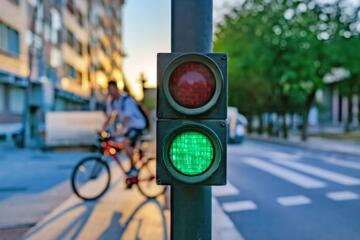
Traffic lights look random when you're stuck at a red for 90 seconds with nobody crossing the street. They are not. Modern signal timing mixes traffic volume, pedestrian flow, emergency routing, fuel consumption, and old-fashioned political complaints into a single system that rarely works perfectly for everyone. If you've ever wondered why one avenue stays green forever while another punishes every driver, the answer usually starts long before you reach the intersection.
 Mobility
08.04.2026
When More People Cycle, a City Changes
Cities change slowly until they do not. Add protected bike lanes, safer intersections, and a few thousand more riders, and the rhythm of a place starts shifting in ways drivers rarely expect. Streets get quieter. Small businesses see more foot traffic. Commutes stop feeling like combat. This article looks at what really happens when cycling becomes normal transportation instead of a weekend hobby — and why the effects reach far beyond traffic.